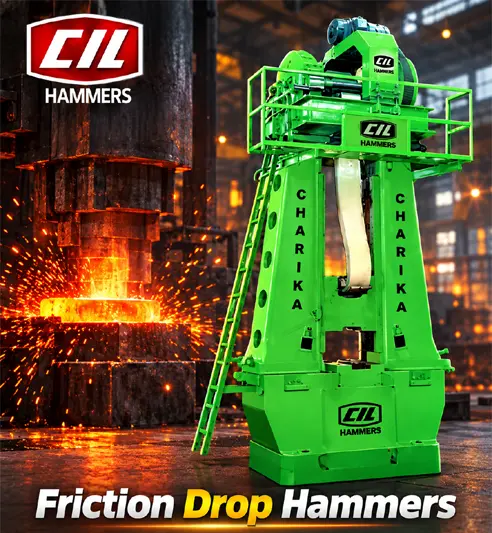
Forging Hammer: How It Shapes Metal in Closed Die Forging
A forging hammer primary tool generate its power from the kinetic energy of a ram and the upper portion of the mold put into motion. The ram and upper die travel in a linear path towards the lower die and anvil. The work is placed in the lower die. At the point of collision when the two die meet, kinetic energy is transferred to the metal forging, forming the part. Although the work stock absorbs a tremendous amount of the blow, much energy is transferred to the machine and to the floor of the building. This should be a consideration when planning a manufacturing operation using a drop forging hammer.
During the forging process, the heated workpiece is placed into the lower die. The drop forging hammer then strikes the upper die with repeated blows, forcing the hot metal to flow outward and fill the die cavity completely — producing a precisely shaped, high-strength part.Quality Standards
Drop forging hammers hold a key place in manufacturing history. They were the tools behind the first industrial process ever developed for closed die forging, well before hydraulic and mechanical presses were introduced.What Are Forging Hammers?
Drop forging holds a significant place in manufacturing history — it was the first industrial process developed for closed die forging, predating the later introduction of hydraulic and mechanical presses. .